

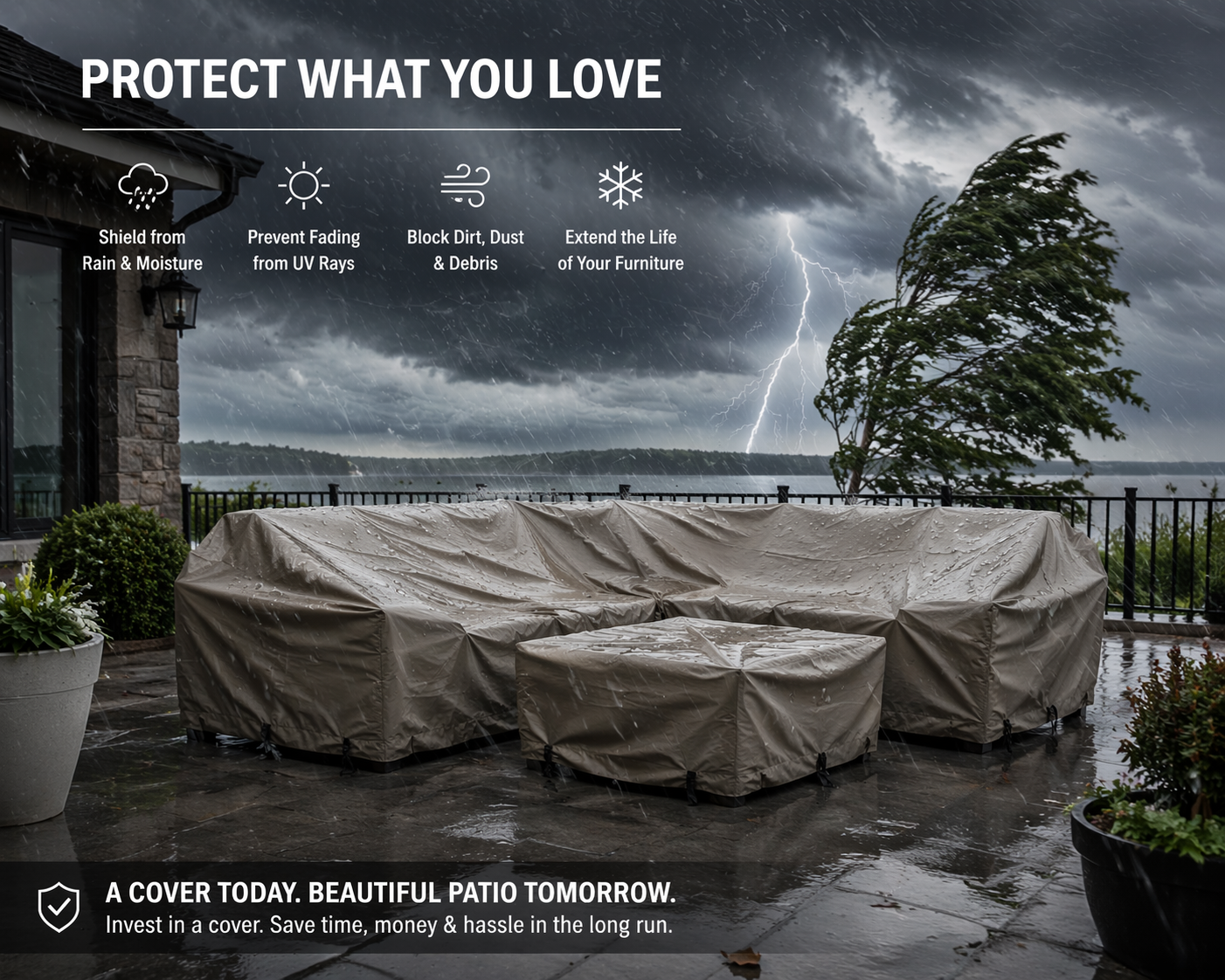
It's a question we get all the time at Sno-Haus: do I need to cover my outdoor furniture? The honest answer is: it depends on what your furniture is made of. Here's a straightforward guide to help you decide.
When You Definitely Need Covers
If your furniture has cushions, covers are essential. Even Sunbrella and Outdura cushion fabrics, which are highly weather-resistant, benefit from protection when furniture is not in use for extended periods. Prolonged exposure to rain, UV, and debris causes unnecessary wear. A good cover protects your cushion investment significantly. Cast aluminum and steel furniture also benefit from covers, especially in Long Island's salt air environment. Even powder-coated finishes can be compromised over time by repeated exposure to salt and moisture. A cover extends the life of the finish considerably.
When You Can Skip the Covers
Marine Grade Polymer and poly furniture — like the MGP collections from Telescope Casual that we carry at Sno-Haus — is specifically engineered to live outside year-round with no protection. This material doesn't rust, crack, splinter, fade, or absorb moisture. Leaving it out all winter without a cover is completely fine. Grade A teak is similarly resilient. While a cover won't hurt, it's not necessary. Teak is naturally weather-resistant and handles Long Island winters without any protection. Many of our teak customers never cover their furniture and it lasts for decades.
What Makes a Good Outdoor Furniture Cover
Not all covers are equal. A good cover is breathable — meaning it lets moisture escape rather than trapping it underneath, which can cause mildew. It should also be UV-resistant so it doesn't crack or fade. Look for covers with straps or ties to keep them secured on windy days. Cheap plastic covers trap moisture and do more harm than good. We carry quality breathable covers at both of our showrooms, sized to fit standard furniture configurations.
The Case for Covers Even When You Don't Need Them
Even if your furniture doesn't technically require covering, a cover keeps it clean and ready to use. On Long Island, pollen, soot, bird droppings, and tree debris accumulate quickly. A cover means you spend less time cleaning and more time enjoying your patio. For customers who entertain frequently, covers make the difference between a patio that's always company-ready and one that needs an hour of scrubbing before guests arrive.
Stop by Sno-Haus in Greenvale or Huntington Station and we'll help you figure out exactly what your furniture needs — and what it doesn't.
FAQs
What patio furniture needs covers?
Furniture with cushions, as well as aluminum and steel frames, benefit most from covers to protect against moisture, UV exposure, and debris.
Can you leave patio furniture uncovered in winter?
Yes, materials like marine-grade polymer and teak can be left uncovered year-round without damage, especially high-quality versions.
Are outdoor cushions waterproof?
Most are water-resistant, not fully waterproof. Covers help extend their lifespan by reducing prolonged exposure to rain and sun.
Do patio furniture covers prevent rust?
Yes, covers help reduce exposure to moisture and salt air, which are major causes of rust on metal furniture.
What is the best material for outdoor furniture covers?
Breathable, UV-resistant fabric is best. Avoid cheap plastic covers that trap moisture and cause mildew.


