

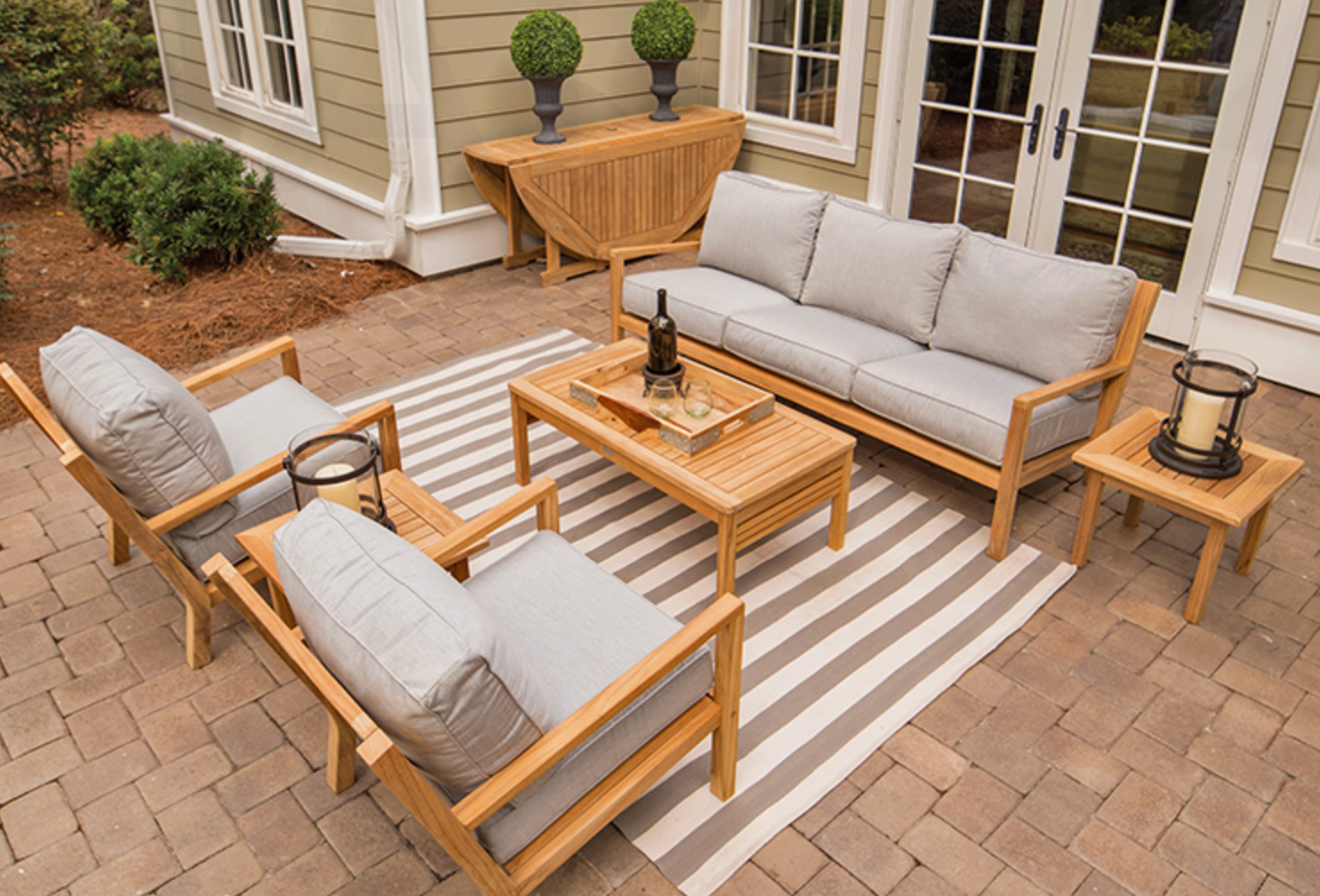
The truth is, a great outdoor space isn’t just about picking beautiful furniture—it’s about creating a layout that works for how you live. Whether you’re hosting dinners, relaxing with family, or just enjoying a quiet morning outside, the right setup makes all the difference.
At Sno-Haus, we help Long Island homeowners figure this out every day. Here’s how to plan your patio layout with confidence.
Start With Your Space (Not the Furniture)
Before you fall in love with a dining set or sectional, measure your patio.
You’ll want to know:
- Total square footage
- Shape (rectangular, square, narrow, etc.)
- Entry/exit points (doors, steps)
- Fixed elements (grill, walls, railings)
Rule of thumb: Always leave at least 2–3 feet of walking space around furniture. This is where many patios go wrong—everything technically “fits,” but nothing feels comfortable.
How Many Seats Can Fit on My Patio?
This is one of the most common questions we hear—and the answer depends on layout, not just size.
Small Patios (Under 150 sq ft)
- Bistro sets or small 4-seat dining sets
- 2–4 person conversation seating
- Compact umbrellas or table umbrellas
Medium Patios (150–300 sq ft)
- 5–7 piece dining sets (4–6 seats)
- Small sectionals or deep seating sets
- Room for a cantilever umbrella
Large Patios (300+ sq ft)
- Full dining + seating areas
- Sectionals with 6–10 seats
- Chaise loungers + umbrellas
- Multiple zones (dining + lounging)
The key is not maximizing seats—it’s maximizing comfort and flow. A crowded patio feels smaller than it actually is.
Choosing Between Dining Sets vs. Seating Sets
Most homeowners want both—but space determines how you prioritize.
Dining Sets
Best for:
- Families who eat outside regularly
- Hosting dinners and gatherings
- Structured seating
Typical sizes:
- 4-seat: great for smaller patios
- 6-seat: most popular for families
- 8+ seat: requires larger spaces
Spacing tip: Allow about 24–30 inches per chair and at least 36 inches behind chairs for movement.
Seating Sets (Deep Seating / Sectionals)
Best for:
- Relaxing and entertaining
- Casual conversations
- Creating a “living room” outdoors
These include:
- Sofas
- Loveseats
- Club chairs
- Sectionals
Pro tip: Sectionals maximize seating but need careful planning—they can overwhelm smaller patios if not sized correctly.
Will This Set Fit on My Patio?
Instead of guessing, use this simple method:
- Measure your space
- Sketch a rough layout
- Compare to furniture dimensions
- Add clearance space (this is critical)
Example:
A 6-person dining table might be 72” long—but with chairs and clearance, you’ll need closer to 10–12 feet of usable space.
This is where shopping in-store matters. At Sno-Haus, you can physically see the scale of each set, sit in it, and understand how it will translate to your backyard.
Where Do Umbrellas Fit Into the Layout?
Umbrellas aren’t just accessories—they’re essential for comfort and usability.
Market Umbrellas (Center Pole)
Best for:
- Dining tables with umbrella holes
- Smaller patios
- Simple, classic setups
Cantilever Umbrellas (Offset)
Best for:
- Sectionals and seating areas
- Flexible shade coverage
- Larger patios
Placement tips:
- Dining: centered over table
- Seating: angled to cover main seating area
- Always consider sun direction throughout the day
Also, don’t forget the base—proper weight is key for safety and stability.
Creating Zones (Even in Smaller Spaces)
One of the biggest upgrades you can make is dividing your patio into functional zones.
Even modest patios can benefit from:
- A small dining area
- A separate seating space
- Defined walkways
You can create separation using:
- Rugs
- Umbrellas
- Furniture orientation
This makes your patio feel more intentional—and more spacious.
Why Seeing It in Person Makes a Huge Difference
Online shopping can give you dimensions—but it can’t show you:
- How deep a seat feels
- How wide a table really looks
- How fabrics appear in natural light
- How pieces work together
At Sno-Haus, our Huntington and Greenvale showrooms let you:
- Sit, test, and compare
- Visualize full layouts
- Get guidance from experienced staff
- Find pieces that actually fit your space
Many items are in stock and available for quick pickup or delivery, so you don’t have to wait to enjoy your patio.
Final Thoughts: Design for How You Live
The best patio layout isn’t about fitting the most furniture—it’s about creating a space that works for you.
Ask yourself:
- Do I entertain often?
- Do I want dining, lounging, or both?
- How much space do I realistically have?
Answer those honestly, and your layout decisions become much easier.
And if you’re unsure, that’s exactly what we’re here for.
Visit Sno-Haus to Plan Your Perfect Patio
Bring your measurements, photos, or even just your questions. Our team will help you choose seating, dining sets, and umbrellas that actually fit your space—and your lifestyle.
Visit our Huntington or Greenvale showroom today and see the difference for yourself.
FAQ Section
How do I know what size patio furniture will fit my space?
Measure your patio and leave at least 2–3 feet of clearance around furniture. Compare those dimensions to product sizes before buying.
How many people can sit on my patio?
It depends on your layout. A medium patio can typically fit 4–6 dining seats or a small sectional comfortably.
Should I choose a dining set or seating set?
If you eat outside often, prioritize dining. If you relax and entertain, go with seating. Larger patios can accommodate both.
What size umbrella do I need?
Your umbrella should extend at least 2 feet beyond your table or seating area for proper shade coverage.
Can I fit both a dining set and sectional on my patio?
Yes, if you have enough space (typically 300+ sq ft). Creating zones helps make both areas functional.


