

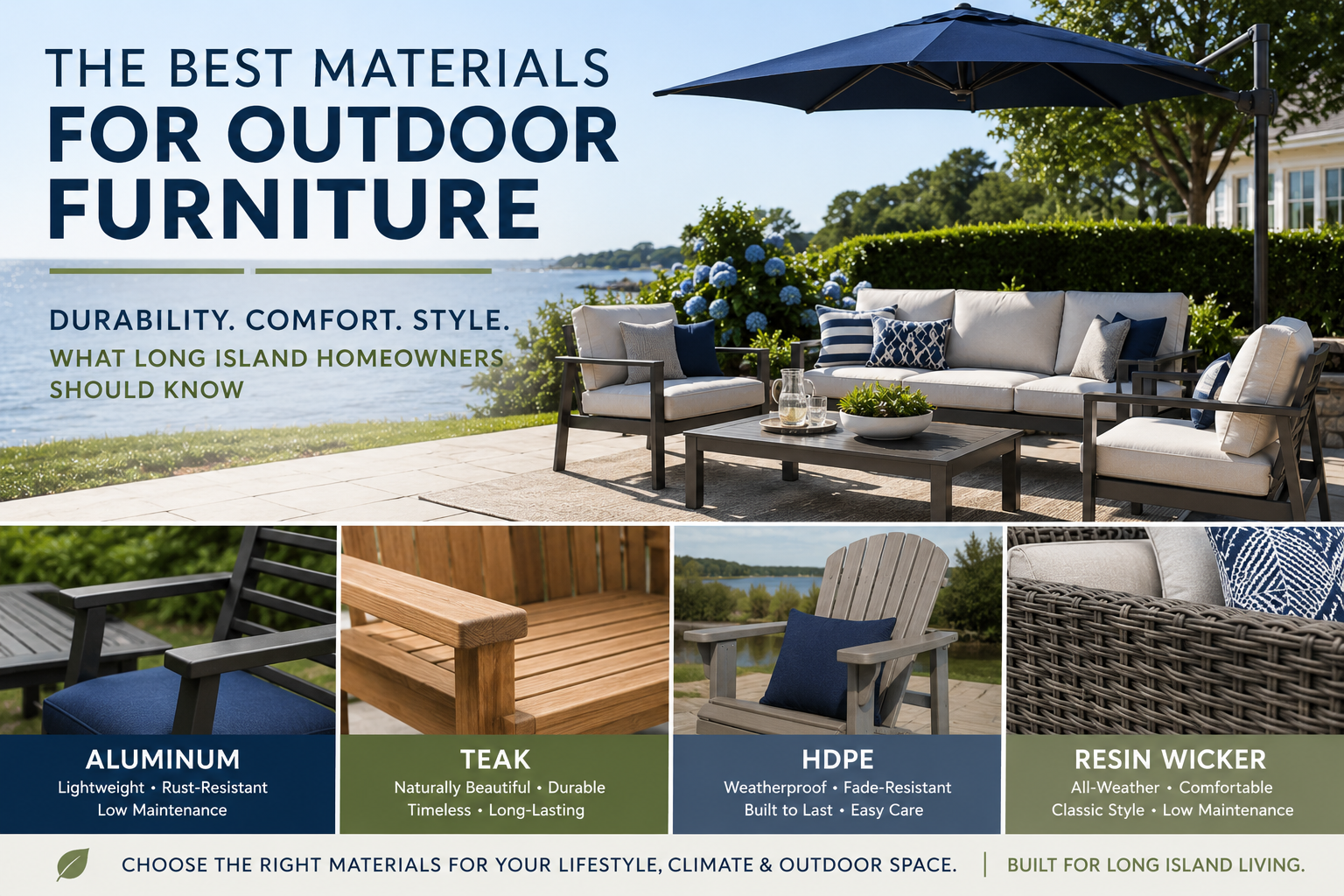
When shopping for outdoor furniture, style matters — but materials matter even more. The right material can help your patio furniture withstand Long Island’s changing weather, from humid summers and coastal salt air to heavy rain, snow, and seasonal temperature swings.
At Sno-Haus, we help homeowners throughout Long Island compare outdoor furniture materials in person so they can choose pieces that match their lifestyle, maintenance preferences, and outdoor environment.
Whether you're furnishing a backyard patio, pool area, deck, or outdoor dining space, understanding the pros and cons of each material can help you make a smarter long-term investment.
Why Outdoor Furniture Material Matters
Outdoor furniture is exposed to UV rays, moisture, humidity, temperature changes, pollen, salt air, and everyday wear. Some materials handle these conditions better than others.
The best outdoor furniture materials balance:
- Durability
- Weather resistance
- Comfort
- Maintenance requirements
- Appearance
- Weight and mobility
- Longevity
Long Island homeowners should especially consider how local weather conditions affect furniture performance over time.
Aluminum Outdoor Furniture
Aluminum is one of the most popular choices for modern outdoor furniture — and for good reason.
Benefits of Aluminum Patio Furniture
- Rust-resistant
- Lightweight and easy to move
- Low maintenance
- Modern, clean appearance
- Performs well in humid and coastal climates
- Works well with many outdoor styles
Most premium outdoor aluminum furniture uses powder-coated frames that help protect against fading, corrosion, and moisture damage. Powder-coated aluminum is especially popular for Long Island patios because it handles rain and humidity very well.
Aluminum furniture is also ideal for homeowners who frequently rearrange their patio layout since it is lighter than materials like wrought iron or teak.
Things to Consider
Because aluminum is lightweight, very windy areas may require heavier furniture designs or secure placement. Dark-colored aluminum can also become hot in direct sunlight during peak summer months.
At Sno-Haus, aluminum collections remain popular because they combine durability with a sleek, versatile look that fits both traditional and contemporary outdoor spaces.
Teak Outdoor Furniture
Teak is considered one of the premium materials for outdoor furniture thanks to its natural durability and timeless appearance.
Why Teak Is So Popular
- Natural oils help resist moisture and rot
- Extremely durable
- Long lifespan
- Beautiful natural wood grain
- Ages into a classic silver-gray patina
- Strong and substantial feel
Teak naturally contains oils that help protect the wood from water, insects, and weather damage, making it one of the best-performing natural materials for outdoor use.
Many homeowners choose teak because it delivers a warm, upscale appearance that works especially well in luxury backyard settings, poolside seating areas, and outdoor dining spaces.
Things to Consider
Teak typically costs more than aluminum or resin wicker, but many homeowners see it as a long-term investment because of its longevity.
Teak can be left untreated to naturally weather into a silver-gray finish, or it can be maintained to preserve its original honey-brown color.
For Long Island homeowners looking for premium outdoor furniture with classic style, teak remains one of the best options available.
HDPE Outdoor Furniture
HDPE stands for High-Density Polyethylene, a highly durable synthetic material commonly used in premium outdoor furniture and Adirondack chairs.
Benefits of HDPE Furniture
- Extremely weather resistant
- Does not rot, crack, or peel easily
- Handles rain, snow, and UV exposure well
- Very low maintenance
- Resists fading
- Great for year-round outdoor use
HDPE furniture has become increasingly popular because it performs exceptionally well in harsh climates and requires minimal upkeep.
Many HDPE products are designed to mimic the appearance of painted wood while offering significantly better weather resistance.
Things to Consider
HDPE furniture is heavier than aluminum and may have a different texture and feel than natural wood. However, many homeowners appreciate its durability and easy maintenance.
HDPE is an excellent choice for Long Island homeowners who want outdoor furniture that can handle changing seasons with minimal effort.
Resin Wicker Outdoor Furniture
Resin wicker — often called all-weather wicker — remains one of the most popular choices for outdoor lounge furniture and deep seating collections.
What Is Resin Wicker?
Unlike natural wicker or rattan, outdoor resin wicker is made from synthetic materials designed to resist weather exposure. High-quality resin wicker is typically woven over aluminum frames for added durability.
Benefits of Resin Wicker
- Comfortable and inviting appearance
- Traditional outdoor look
- Available in many styles and colors
- Lower maintenance than natural wicker
- Works well for outdoor sectionals and lounge seating
Premium resin wicker made with HDPE materials tends to perform significantly better than lower-quality PVC wicker.
Things to Consider
Quality matters tremendously with resin wicker. Lower-quality wicker may crack, fade, or unravel over time, especially in areas with constant direct sunlight or harsh winters.
Long Island homeowners should look for:
- HDPE wicker
- UV-resistant materials
- Aluminum frames
- Weather-resistant cushions
At Sno-Haus, many homeowners choose resin wicker because it creates a comfortable, welcoming outdoor living space while still offering strong weather resistance.
How Climate Should Influence Your Decision
One of the biggest mistakes homeowners make is choosing outdoor furniture based only on appearance instead of climate compatibility.
Humid & Coastal Areas
Long Island’s humidity and coastal salt air can be tough on certain materials. Aluminum, HDPE, teak, and high-quality resin wicker generally perform best in these environments.
Full Sun Exposure
If your patio receives direct sunlight throughout the day, UV-resistant materials become especially important. HDPE, powder-coated aluminum, teak, and performance outdoor fabrics tend to hold up best under strong sun exposure.
Cold Winters & Freeze-Thaw Cycles
Long Island winters can be rough on outdoor furniture. HDPE and powder-coated aluminum generally handle freeze-thaw cycles extremely well, while teak also performs strongly when properly maintained.
Covered vs Uncovered Patios
If your furniture sits under a covered patio or pergola, you may have more flexibility with materials. Uncovered patios typically benefit from more weather-resistant options like aluminum, teak, HDPE, and premium resin wicker.
Why Shopping Outdoor Furniture in Person Matters
Online photos rarely tell the full story when it comes to outdoor furniture materials. The weight, texture, comfort, frame quality, and cushion construction can vary significantly.
At Sno-Haus, customers can compare materials side-by-side and experience the comfort and construction quality firsthand. Our team helps Long Island homeowners choose outdoor furniture that fits both their design goals and local climate conditions.
We carry premium outdoor furniture collections from trusted brands including:
- Treasure Garden
- Woodard
- Kingsley Bate
- Telescope
- Kettler
- Three Birds
Whether you're looking for aluminum dining sets, teak seating, Adirondack chairs, umbrellas, or all-weather wicker sectionals, our Huntington and Greenvale showrooms make it easier to compare styles and materials in person.
Final Thoughts
The best outdoor furniture material depends on your lifestyle, climate, maintenance preferences, and design style.
For many Long Island homeowners:
- Aluminum offers low-maintenance versatility
- Teak provides premium beauty and longevity
- HDPE delivers exceptional durability
- Resin wicker creates comfortable outdoor living spaces
Choosing the right material now can help your outdoor furniture look better and last longer for years to come.
Frequently Asked Questions
What is the most durable material for outdoor furniture?
Teak, HDPE, and powder-coated aluminum are among the most durable outdoor furniture materials. Each performs well in different climates and offers strong weather resistance.
Is aluminum outdoor furniture good for Long Island weather?
Yes. Powder-coated aluminum is highly resistant to rust, humidity, and rain, making it an excellent choice for Long Island patios and coastal environments.
What is HDPE outdoor furniture?
HDPE stands for High-Density Polyethylene, a durable synthetic material designed to resist moisture, UV rays, cracking, and fading in outdoor environments.
Does resin wicker hold up outdoors?
High-quality resin wicker made with HDPE and aluminum frames performs very well outdoors. Lower-quality wicker materials may fade or crack over time.
Should climate affect outdoor furniture choices?
Absolutely. Humidity, coastal salt air, direct sunlight, rain, and winter weather all impact how outdoor furniture materials perform over time.


