

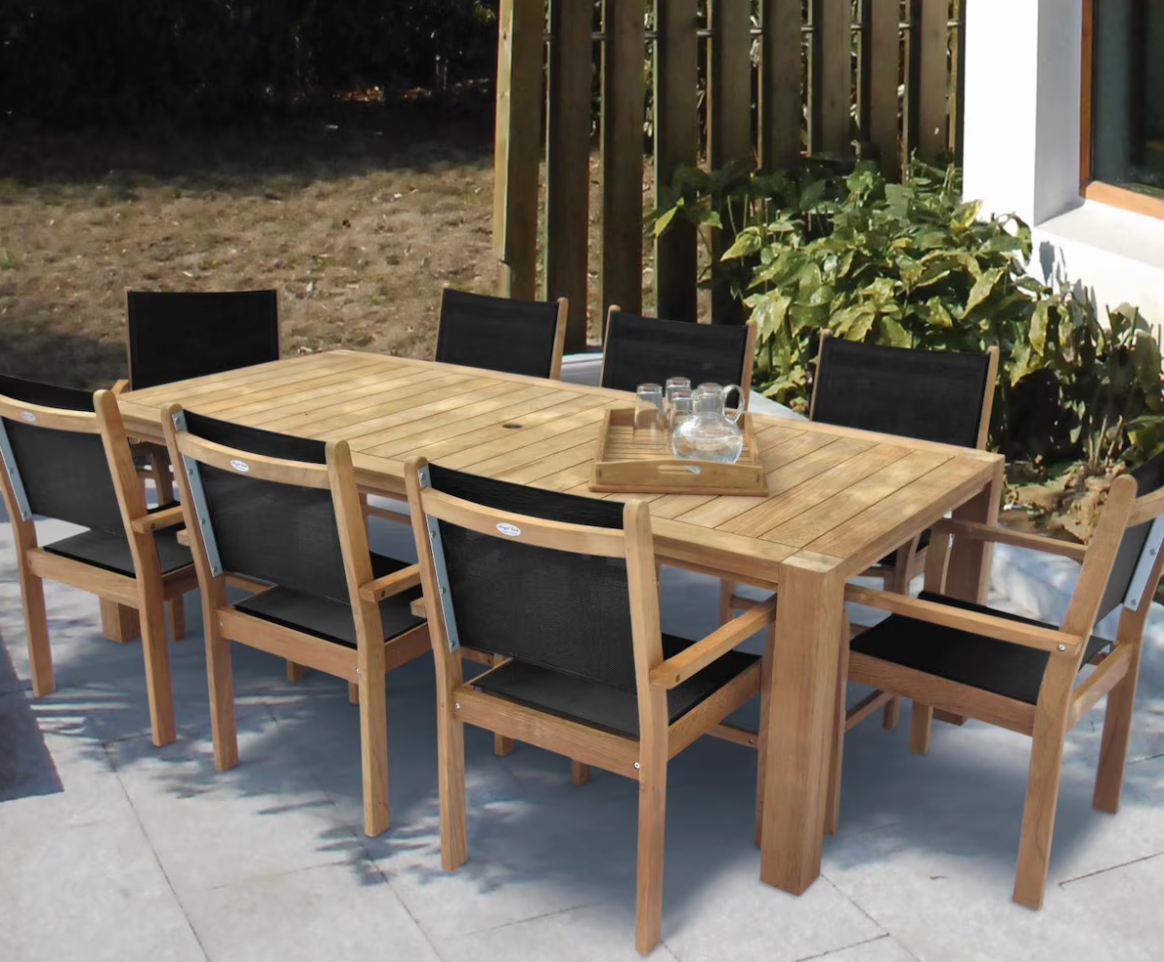
If you've been shopping for outdoor furniture on Long Island, you've probably heard the term "Grade A teak" thrown around. But what does it actually mean — and why does it matter? At Sno-Haus, we've been selling teak furniture for years, and we can tell you: not all teak is created equal. Here's what you need to know before you buy.
What Is Grade A Teak?
Teak is graded based on where the wood comes from within the tree. Grade A teak is cut from the heartwood — the dense, mature center of the tree. This is where the natural oils are most concentrated. Those oils are what make teak weather-resistant, rot-resistant, and incredibly durable. Grade B and Grade C teak come from the outer rings of the tree, where the wood is younger and the oil content is significantly lower. The difference isn't subtle — Grade A teak can last 20 to 30 years outdoors. Lower grades may start to crack, warp, or splinter within just a few seasons.
How to Identify Grade A Teak
Grade A teak has a uniform golden-brown color with tight, consistent grain. You'll see very few knots and minimal sapwood — the lighter, younger wood that lacks durability. When you run your hand across a piece of Grade A teak furniture, the surface feels dense and slightly oily. That's the natural teak oil doing its job. At Sno-Haus, we carry Grade A teak exclusively from brands like Kingsley Bate, Three Birds Casual, and Royal Teak — manufacturers who have built their reputations on sourcing the best raw material available.

Checking in Teak: What It Is and Why It's Normal
If you notice small cracks or splits appearing along the surface of your teak furniture, don't panic. This is called "checking" — and it's a completely normal characteristic of solid wood, including Grade A teak. Checking occurs when the surface of the wood dries at a slightly different rate than the interior, causing minor surface cracks along the grain. It does not indicate poor quality, structural weakness, or damage. In fact, checking is often more common in the highest-density, most oil-rich heartwood — the very wood that makes Grade A teak so durable. Checking is purely cosmetic and has no effect on the longevity or performance of your furniture. Over time, as the wood acclimates to your local environment, checking often stabilizes on its own. If the appearance bothers you, a light sanding followed by an application of teak oil can minimize the look of surface checks. But left alone, your teak furniture will continue to perform beautifully for decades regardless.
Why Grade A Teak Makes Financial Sense on Long Island
Long Island's coastal environment is tough on outdoor furniture. Salt air, humidity, heavy rain, and intense summer sun take a serious toll. Many homeowners make the mistake of buying cheaper furniture every two or three years. When you add up the replacement costs, you've often spent more than a quality piece of Grade A teak would have cost upfront — and you've dealt with the hassle of shopping, delivery, and disposal each time. A quality teak dining set or sectional from Sno-Haus is a one-time purchase that will outlast multiple rounds of cheaper alternatives. We've seen teak furniture from our Greenvale showroom still looking beautiful on customers' patios after fifteen or twenty years.
Does Grade A Teak Require Maintenance?
This is one of the most common questions we get. The short answer is: very little. Left untreated, Grade A teak will naturally weather to a beautiful silver-gray patina. Many customers love this look — it's elegant and low maintenance. If you prefer to keep that original golden color, a light annual application of teak oil or sealer is all it takes. Alternatively, you can sand your teak furniture to bring back its natural look. Either way, you're looking at minimal upkeep compared to painted aluminum, wicker, or wood alternatives that require sanding, repainting, or replacement cushions every season.
Come See It in Person
The best way to understand the quality difference is to see and feel it yourself. Visit our showrooms in Greenvale or Huntington Station, and our team will walk you through our full teak collection. We carry dining sets, lounge chairs, sectionals, benches, and chaise lounges — all in Grade A teak, built to handle everything Long Island weather can throw at them.
Stop by Sno-Haus today — Greenvale and Huntington Station. Your patio deserves the real thing.
FAQ Section
What is Grade A teak?
Grade A teak comes from the dense heartwood of the tree, offering the highest oil content, durability, and weather resistance.
How long does Grade A teak furniture last?
With proper conditions, Grade A teak can last 20–30 years or more outdoors, even in harsh climates like Long Island.
What is checking in teak furniture?
Checking refers to small surface cracks in the wood. It’s completely normal, cosmetic, and does not affect durability.
Does teak furniture need maintenance?
Very little. You can let it weather naturally to a gray patina or apply teak oil annually to maintain its golden color.
Is teak good for coastal environments like Long Island?
Yes. Grade A teak performs exceptionally well against salt air, humidity, sun, and rain.
Why is Grade A teak more expensive?
It uses the highest-quality part of the tree, making it more durable and longer-lasting—saving money over time compared to cheaper materials.


