

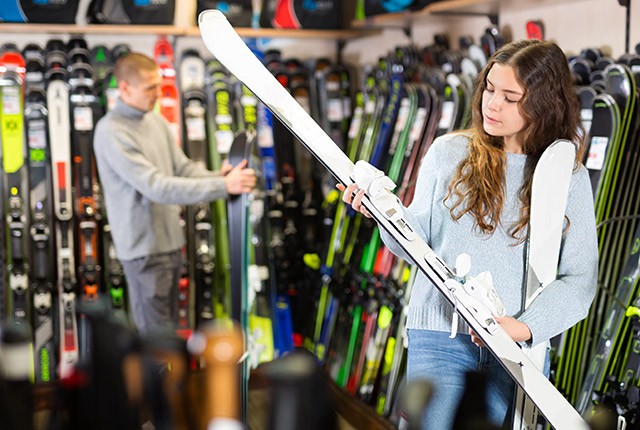
Walking into a ski shop for your first pair of skis can be overwhelming. There are so many lengths, widths, shapes, and price tags to choose from. The truth is, you don’t need the fanciest or most expensive skis on the wall. What matters is finding a pair that fits your body, matches your skill level, and suits the kind of terrain you plan to ski.
If you’re a Long Island skier heading to the slopes in New York or New England, you’ll want skis that give you confidence and control on groomed trails and firmer snow. There’s no need to shop for powder skis built for deep Western snow unless that’s where you’ll actually ski.
Start With Your Ability Level
Your current skiing ability is one of the most useful filters.
Beginner skis generally emphasize easy turn initiation and manageable flex. Intermediate skis may add stronger edge engagement and greater stability. Advanced skis can demand more precise technique and may feel less forgiving at slower speeds.
One of the biggest mistakes first-time buyers make is picking skis for the skier they want to be in a few years, not the one they are now. While it’s smart to leave some room to grow, choosing skis that are too advanced can actually hold you back and make learning less fun.
How Long Should Your Skis Be?

Ski length is influenced by several factors rather than height alone:
- Height
- Weight
- Ability level
- Ski construction and rocker profile
- Preferred turn shape
- Terrain and speed
Shorter skis are easier to turn and control, which is why they’re often recommended for beginners. Longer skis feel more stable at speed and give you more surface area, but they take more effort to handle.
That’s why two skiers who are the same height might walk out of the shop with different ski lengths—it depends on more than just how tall you are.
What Does Ski Width Mean?
When shoppers discuss ski width, they are usually talking about waist width: the measurement under the boot.
Ski width affects how quickly you can roll from edge to edge and how much float you get in softer snow.
Narrow skis are quick and nimble, making them great for groomed runs and hard-packed snow. Wider skis give you more float when it’s soft or deep, but they can feel slower to turn on firmer trails.
What Ski Width Makes Sense for the East Coast?
There is no single ideal East Coast width because skiing in the Northeast ranges from groomed trails and firm mornings to trees, bumps and legitimate powder days.
For most recreational skiers, something in the mid-70s to low-90s millimeter range underfoot will handle a wide mix of East Coast conditions. If you love carving up groomers, lean toward the narrower side. If you spend more time in the trees or chase fresh snow, a bit more width can help.
The key is to pick skis for the kind of days you have most often—not just the rare powder day.
Think About Where You Actually Ski
Mostly groomed trails
Look for skis that are easy to turn and hold an edge well on firmer snow.
A little of everything
All-mountain skis are built to handle a bit of everything: groomers, bumps, some fresh snow, and whatever else the resort throws your way.
Freestyle and park
If you’re into park skiing—hitting jumps, rails, or skiing switch—look for twin-tip skis with the right flex for your style.
Freeride and soft snow
If deep snow is your thing, wider skis with more rocker up front will help you stay on top and turn more easily.
What Are Rocker and Camber?
Camber traditionally describes the arch of the ski when it is unweighted. It helps create edge engagement and energy through a turn.
Rocker refers to portions of the ski that rise away from the snow earlier toward the tip, tail or both. Rocker can make turn initiation easier and improve maneuverability or flotation.
Most modern all-mountain skis blend camber and rocker, so you don’t have to pick just one or the other—you get the benefits of both.
Do Skis Come With Bindings?
Sometimes. Some skis are sold as systems with bindings designed for that ski, while others are sold flat and require compatible bindings to be selected and mounted separately.
Don’t pick your bindings just because you like the color or the brand. They need to fit your boots, match your skis, and be set up for your weight and skill level—a job best left to a good ski tech.
Buy Your Boots Carefully
If there is one piece of equipment not to treat as an afterthought, it is the ski boot.
Even the best skis in the world can’t make up for boots that are too big, don’t fit your feet, or let your heels lift up and down.
Boot width, instep shape, cuff size, and flex all matter for how boots fit. That’s why it’s so important to try boots on in person instead of just picking a size online.
Why the Most Expensive Ski Is Not Automatically the Best Ski
Just because a ski costs more doesn’t mean it’s better for you. Expensive skis might use fancy materials, but what matters is how well they match your needs.
Skis made for experts can actually make things harder if you’re still building skills. And it doesn’t make sense to buy a powder ski if you mostly stick to groomed runs.
The real question is: Which skis will help you enjoy the runs you love and ski with more confidence?
What to Tell the Staff at a Ski Store
A useful equipment conversation should include more than your height.
- How many days you ski each season
- Where you normally ski
- Which trails you are comfortable on
- Whether you prefer relaxed cruising or higher speeds
- Whether you ski bumps, trees or park
- What you liked or disliked about previous rental skis
- Your approximate equipment budget
These details help the shop staff point you to just the right handful of skis, instead of leaving you lost in a sea of choices.
Frequently Asked Questions
What size skis should a beginner buy?
If you’re new to skiing, go for a length that’s easy to turn and control. But remember, the right size depends on your height, weight, skill, and where you ski—charts are helpful, but they’re just a starting point.
Are wider skis better?
Not always. Wider skis float better in soft snow, but narrow skis are quicker edge-to-edge on hardpack. Pick what fits your local conditions and the trails you ski most.
Should I buy ski boots or skis first?
Both are important, but boots come first—if your boots don’t fit right, you’ll never ski your best, no matter how good your skis are.
Do beginner skiers need expensive skis?
Nope. What matters is that your skis match your ability and the type of skiing you want to do—not how much you spend.
If you’re shopping for your first skis, check out a few options that fit your needs instead of picking by looks or brand alone. At Sno-Haus, our shops in Huntington, Greenvale, and Hempstead are here to help you put together the right setup—skis, boots, and bindings—so you can hit the slopes with confidence.


