

Whether you are heading to Vermont for a weekend ski trip or planning a family vacation out west, having the right ski gloves is essential. Cold, wet hands can quickly ruin a day on the mountain, while properly fitted and insulated gloves can help keep you comfortable from the first chairlift ride to the final run.
At Sno-Haus, we have been helping Long Island skiers prepare for winter since 1959. One of the most common questions we hear each season is, “What ski gloves should I buy?” The answer depends on where you ski, how often you ski, the conditions you expect, and how easily your hands get cold.
This guide explains the most important factors to consider, including insulation, moisture protection, fit, cuff style, and useful mountain-ready features.
Why Choosing the Right Ski Gloves Matters
Ski gloves do much more than keep your hands warm. They also help protect against wind, moisture, snow, cold chairlift bars, and everyday contact with ski equipment.
Good ski gloves should also provide enough dexterity to hold poles, adjust jacket zippers, manage bindings, carry equipment, and use chairlifts comfortably.
Quality ski gloves commonly include:
- Waterproof or water-resistant materials
- Insulation designed for cold mountain conditions
- Breathable construction to manage perspiration
- Durable palms for grip and wear resistance
- Adjustable wrists or cuffs
- Extended gauntlets or snow-blocking closures
Unlike basic everyday winter gloves, ski gloves are designed for prolonged exposure to snow, wind, and changing temperatures.
Understand the Different Insulation Levels
Insulation is one of the most important factors when choosing ski gloves. The warmest glove is not automatically the best glove for every skier. Your activity level, circulation, destination, and typical skiing conditions all matter.
Lightweight Insulation
Lightly insulated gloves are ideal for spring skiing, milder temperatures, and active skiers who naturally generate plenty of body heat. They usually provide better dexterity and breathability but may not offer enough warmth during very cold or windy days.
Midweight Insulation
Midweight ski gloves are a versatile choice for many recreational skiers. They provide a practical balance of warmth, comfort, and finger movement across a broad range of winter conditions.
For skiers who only want to own one primary pair, a well-designed midweight or moderately warm glove is often a sensible place to start.
Heavyweight Insulation
Heavily insulated gloves are designed for cold temperatures, high elevations, long chairlift rides, and skiers whose hands tend to get cold easily. The tradeoff is that additional insulation can sometimes reduce finger mobility.
If you regularly ski in northern New England, during the coldest part of winter, or in windy mountain conditions, prioritizing warmth may be worth the slight reduction in dexterity.
Waterproof vs. Water-Resistant Ski Gloves
Keeping your hands dry is just as important as keeping them warm. Once insulation becomes wet, it may not retain heat as effectively, which can lead to cold and uncomfortable hands.
Many premium ski gloves use waterproof and breathable materials intended to block exterior moisture while allowing some internal perspiration to escape. This combination is particularly useful during active ski days when your hands may alternate between working hard and sitting still on a chairlift.
Water-resistant gloves may be suitable for mild weather, shorter outings, or occasional use. Frequent skiers and anyone expecting wet snow will often benefit from stronger weather protection.
It is also important to remember that leather areas require appropriate care. Follow the manufacturer’s instructions for conditioning and drying your gloves to help maintain their performance over time.
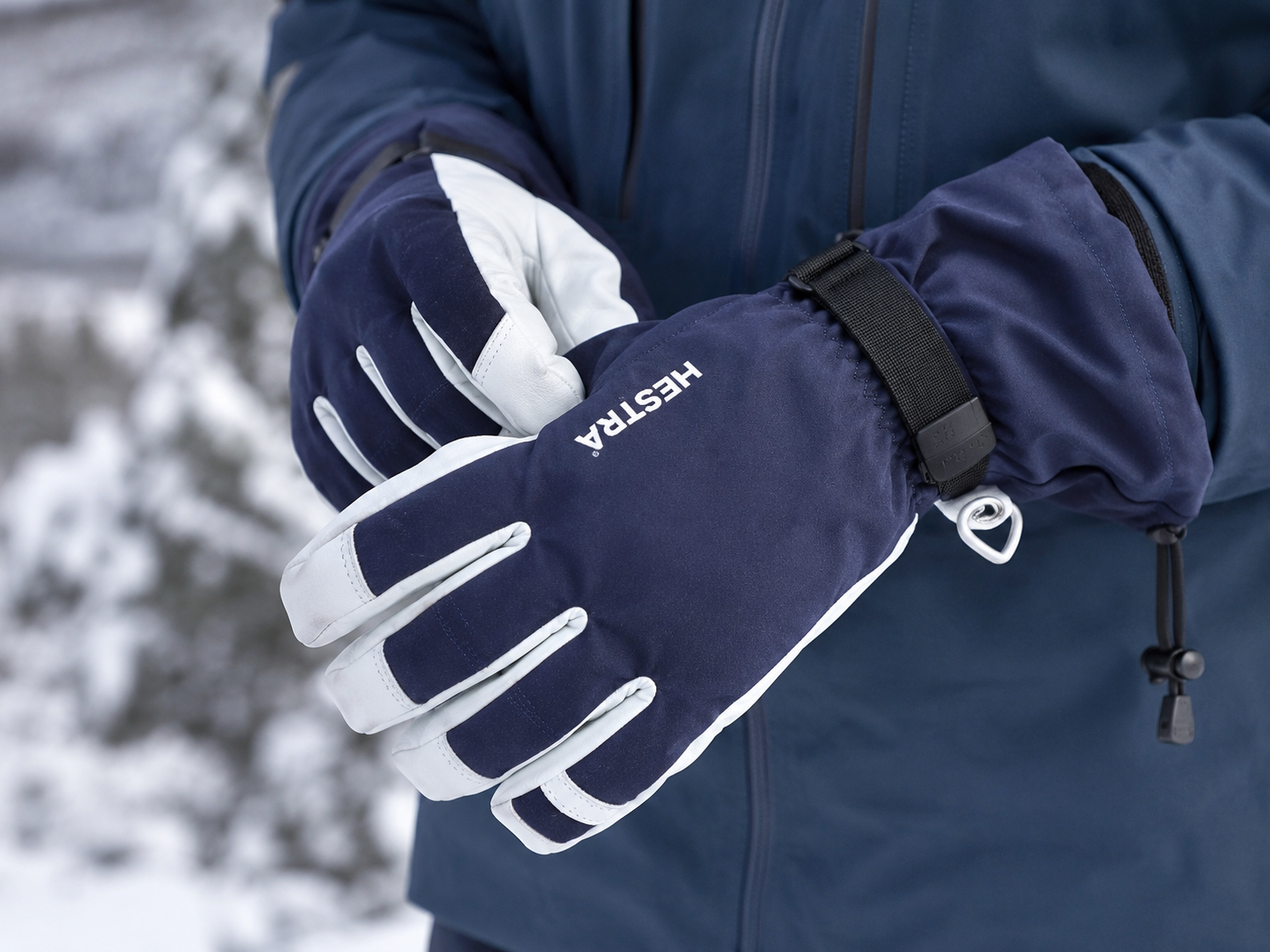
The Hestra Army Leather Heli Ski Glove is a long, durable ski glove designed for skiers who want dependable warmth and protection in snowy mountain conditions. Its extended construction is especially useful when skiing in powder or during storms because the gauntlet helps provide additional coverage around the jacket sleeve.
Notable features include:
- A waterproof and breathable three-layer polyamide fabric on the backhand
- Impregnated goat leather on the palm and fingers
- A removable fleece liner with polyester G-Loft insulation
- A curved fit designed to provide comfort and grip
- A snowlock with drawstring adjustment
- An adjustable Velcro wrist closure
- Included wrist straps, sometimes called glove handcuffs
- Attachment options including a carabiner, eyelet, and hanging loop
The removable liner is one of the glove’s most useful features. It can make drying easier after a full day on the mountain and provides flexibility for skiers who want to adapt their glove system to different temperatures or activity levels.
This glove is an especially strong option for skiers who prioritize warmth, coverage, durability, and practical storm-day features. As with any glove, however, the right size and fit remain essential. Trying it on in person can help you determine whether its shape and insulation level are right for your hands.
How Should Ski Gloves Fit?
Fit plays a major role in warmth and performance. Gloves that are too tight may compress the insulation and restrict circulation, making your fingers feel colder. Gloves that are too loose can reduce dexterity and make it harder to maintain a secure grip on poles or equipment.
A properly fitting ski glove should:
- Allow your fingers to move naturally
- Provide a small amount of space at the fingertips
- Feel secure without squeezing your hand
- Stay in place when you move your wrist
- Leave enough room for the insulation to retain warmth
Glove sizing and finger shape can vary between brands and models. That is why trying gloves on at a ski shop can be more helpful than relying on a general small, medium, or large size alone.
Ski Gloves vs. Mittens
Many skiers wonder whether gloves or mittens are the better choice. Both have advantages, and the right answer usually comes down to warmth needs and personal preference.
Advantages of Ski Gloves
- Greater individual finger movement
- Better dexterity for equipment adjustments
- A more natural grip on ski poles
- Easier access to zippers, buckles, and small items
Advantages of Mittens
- Often warmer because the fingers share heat
- A strong choice for very cold conditions
- Helpful for skiers who regularly struggle with cold hands
- Simple and comfortable for many younger skiers
Some experienced skiers own both styles and choose between them based on the forecast. A glove may be the everyday option, while a mitten becomes the preferred choice on especially cold days.
Choose the Right Cuff Style
Ski gloves generally have either an under-cuff or over-cuff design.
Under-Cuff Gloves
Under-cuff gloves fit beneath the jacket sleeve. They tend to have a streamlined appearance and can work well with jackets that have effective wrist closures.
Over-Cuff or Gauntlet Gloves
Gauntlet gloves extend over the jacket sleeve and usually include a drawstring or adjustable closure. They provide additional coverage and can be particularly helpful in powder, wet snow, or storm conditions.
The Hestra Army Leather Heli Ski Glove featured above uses a long gauntlet-style design with a snowlock, making it a practical example of an over-cuff glove.
Additional Ski Glove Features Worth Considering
Modern ski gloves can include a wide range of features designed to improve comfort, durability, and convenience.
- Adjustable wrist straps: Help keep the glove secure and reduce movement around the wrist.
- Snowlock closures: Tighten the cuff to help prevent snow from entering.
- Reinforced palms: Add grip and durability in high-wear areas.
- Removable liners: Make drying easier and provide additional versatility.
- Wrist leashes: Help prevent gloves from falling when removed on a chairlift.
- Touchscreen-compatible fingertips: Allow limited phone use without completely removing the glove.
- Attachment loops or clips: Make it easier to secure, carry, or store gloves.
Not every skier needs every feature. Focus on the elements that solve the problems you experience most often, whether that means cold fingertips, wet cuffs, limited grip, or difficulty drying your gloves between ski days.
How Many Pairs of Ski Gloves Should You Own?
Occasional skiers may only need one dependable pair. Frequent skiers often benefit from keeping a second pair available.
A primary insulated glove can handle regular winter conditions, while a lighter glove may be useful during warmer spring days. A backup pair is also valuable if your main gloves become wet during a multi-day trip.
For families traveling with children, packing an extra pair can prevent a misplaced or soaked glove from disrupting an entire ski day.
Why Shop for Ski Gloves at Sno-Haus?
Choosing ski gloves online can be challenging because warmth, finger length, hand shape, insulation, and comfort are highly personal. At Sno-Haus, our knowledgeable team can help you compare options and identify the features that make sense for your skiing style.
You can try gloves on, compare insulation levels, test finger movement, and see how different cuffs work with your ski jacket. We can also help you coordinate gloves with other essentials such as helmets, goggles, outerwear, socks, and base layers.
Sno-Haus has served the Long Island ski and snowboard community since 1959. We work with beginners, families, weekend travelers, and experienced skiers who want practical guidance before heading to the mountain.
Get Ready for Your Next Ski Trip
The right ski gloves can make a noticeable difference in your comfort on the mountain. Look for a pair that fits correctly, provides the right level of insulation, protects against the conditions you expect, and offers the dexterity you need.
Shop online or visit Sno-Haus in Huntington, Greenvale, or Hempstead to compare ski gloves and other winter essentials in person. Call ahead to check current size, color, and product availability.
FAQ Section (HTML + JSON-LD SCHEMA)
Frequently Asked Questions
What ski gloves should I buy?
Choose ski gloves based on your usual weather conditions, how easily your hands get cold, and how much dexterity you need. Many recreational skiers prefer a moderately insulated glove with strong moisture protection and an adjustable cuff.
Should ski gloves fit tightly or loosely?
Ski gloves should feel secure but not tight. Your fingers should move naturally, with a small amount of room near the fingertips. A glove that is too tight can restrict circulation and compress the insulation.
Are mittens warmer than ski gloves?
Mittens are generally warmer because your fingers share heat inside one compartment. Ski gloves provide better individual finger movement and are often easier to use when holding poles or adjusting equipment.
What makes the Hestra Army Leather Heli Ski Glove a strong option?
The Hestra Army Leather Heli Ski Glove combines a long gauntlet design, a waterproof and breathable fabric backhand, a goat-leather palm and fingers, a removable insulated liner, an adjustable snowlock, and included wrist straps.
Should I bring a second pair of ski gloves?
A backup pair is useful during multi-day trips, especially if your primary gloves become wet. Frequent skiers may also keep a lighter pair for warmer spring conditions and a more insulated pair for colder winter days.


