

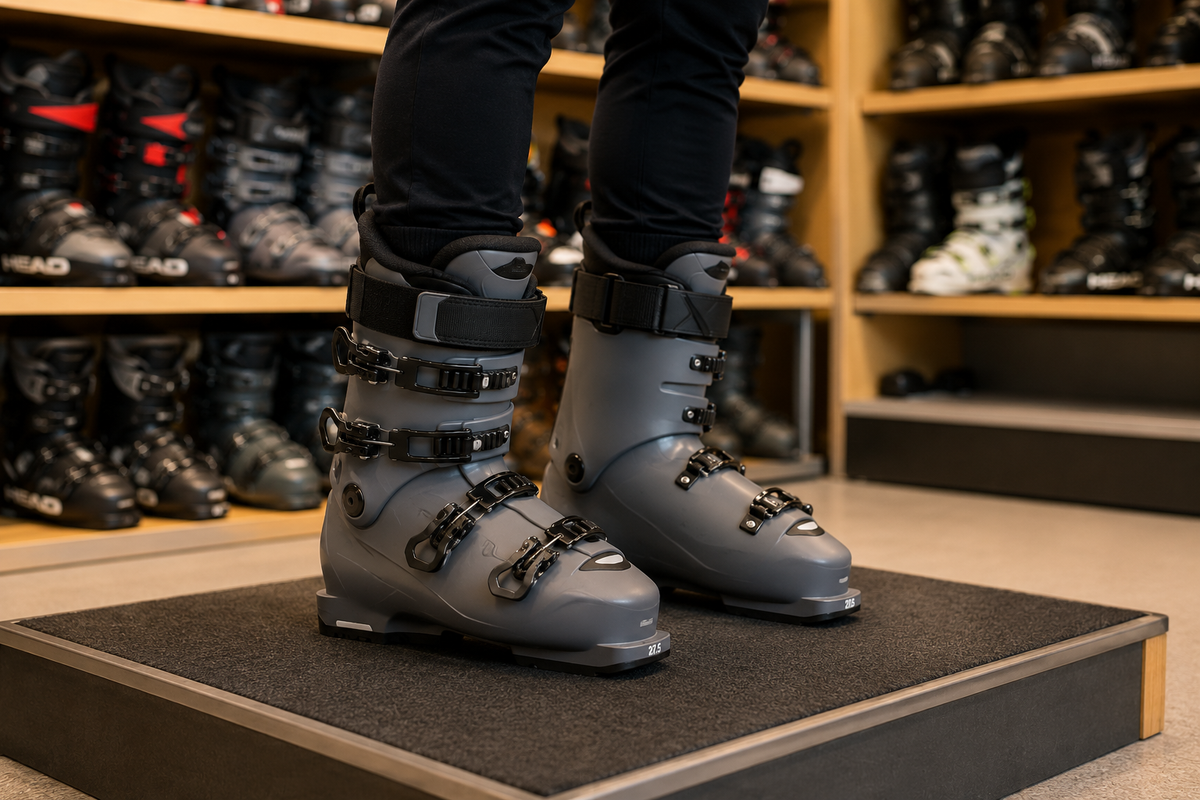
Skis may get most of the attention, but your ski boots have an enormous influence on how you feel and perform on the mountain. A boot that fits properly transfers your movements to your skis, supports your feet, and lets you spend more time enjoying your runs rather than worrying about pressure points, numb toes, or heel movement.
That is why buying ski boots should involve more than simply choosing your regular shoe size and ordering a pair online. Ski boots fit differently from everyday footwear, and small differences in foot shape, volume, flex, and skiing style can have a major impact.
At Sno-Haus, our team of experts helps Long Island skiers find ski boots that suit their feet and their style of skiing. With decades of experience serving local skiers, we understand how important the right fit can be before you head north for a weekend or settle in for a full season on the slopes.
Why Ski Boot Fit Matters So Much
Your ski boots are the connection between your body and your skis. Every time you flex forward, initiate a turn, adjust your balance, or pressure an edge, your boots help translate those movements to the ski.
If a boot is too loose, your foot may move inside the shell before the ski responds. If it is too tight in the wrong places, discomfort can become distracting and may cut a great ski day short.
A properly selected and fitted ski boot should provide a secure, supportive feel while accounting for the unique shape of your foot. The goal is not simply to find a boot that feels soft and roomy when you first put it on. The goal is to find the right combination of fit, support, and performance for your needs.
A Ski Boot Should Not Fit Like a Regular Shoe
One of the most common mistakes new ski boot buyers make is expecting ski boots to fit like sneakers or casual shoes.
Everyday footwear generally leaves extra room around the foot. Ski boots need a more precise fit because excess movement can reduce control and allow the heel or foot to shift inside the boot.
A new ski boot may initially feel snugger than expected. That does not automatically mean it is too small. The liner can settle with use, and an experienced boot fitter can evaluate whether the shell length, width, volume, and overall shape are appropriate for your foot.
This is one of the biggest advantages of shopping for ski boots in person. Instead of guessing from a size chart, you can try different options and have someone knowledgeable evaluate how each boot actually fits.
Professional Ski Boot Fitting Looks Beyond Size
Two skiers who wear the same street shoe size can need very different ski boots. Professional ski boot fitting considers much more than the number printed on the box.
Foot Shape and Width
Some feet are narrow, some are wide, and many fall somewhere in between. The shape of the forefoot, heel, ankle, and instep can all influence which ski boot works best.
Overall Foot Volume
Boots with similar lengths can feel completely different because of their internal volume. Matching the boot's shape to your foot can help create a more secure and comfortable fit.
Heel Hold
A secure heel is important for control. Excessive heel movement can make the skier feel disconnected from the ski and may encourage over-tightening the buckles to compensate.
Flex
Ski boot flex describes how resistant the boot is to forward movement. The appropriate flex depends on factors such as skier ability, size, skiing style, and personal preference. A boot that is unnecessarily stiff can be difficult to manage, while one that is too soft may not provide the support a stronger skier wants.
Experience and Skiing Goals
A beginner learning to build confidence may have different boot requirements than an experienced skier looking for greater precision and responsiveness. A good fitting conversation takes those goals into account.
Common Signs Your Ski Boots May Not Fit Correctly
Ski boots are naturally more structured than everyday footwear, but you should not have to accept serious discomfort as part of skiing. Common signs that your current boots deserve a closer look include:
- Persistent pressure points or painful areas
- Numbness or tingling while skiing
- Excessive heel lift
- Your foot sliding or moving inside the boot
- Having to overtighten the buckles to feel secure
- Difficulty controlling your skis despite otherwise sound technique
- Feet becoming uncomfortable enough that you regularly end your ski day early
These symptoms can have different causes, which is another reason an in-person evaluation is valuable. Sometimes the issue is sizing. In other situations, the shape or volume of the boot simply may not be a good match for the skier.
Better-Fitting Ski Boots Can Improve Comfort and Control
The benefits of proper ski boot fitting go beyond avoiding sore feet.
When your foot is held securely, your movements can be transferred more directly to the ski. That can help create a more connected feeling when initiating turns, controlling edges, and adjusting your balance.
A better fit can also reduce the temptation to crank down every buckle as tightly as possible. Skiers sometimes overtighten loose-fitting boots in an attempt to prevent movement, which can create additional pressure and discomfort.
For recreational skiers in particular, comfort and performance are closely connected. When your boots fit well, you can focus more attention on your technique, the terrain, and the people you are skiing with rather than what is happening inside your boots.
Why Buying Ski Boots Online Can Be Difficult
Online shopping is convenient for many products, but ski boots are unusually dependent on individual fit. A product description can tell you about flex, features, and intended skier type, but it cannot tell you exactly how the boot will interact with your foot.
Ordering based only on street shoe size can also be misleading. Different boot shapes and volumes may fit the same person very differently.
At a ski shop, you can compare multiple boots, discuss how and where you ski, and get feedback on how the shell and liner fit your feet. That experience can be especially useful for first-time boot buyers, growing teenagers, skiers replacing older equipment, or anyone who has experienced recurring boot discomfort.
What to Expect When Shopping for Ski Boots at Sno-Haus
Sno-Haus has been serving Long Island skiers since 1959. Our approach is centered on helping customers choose equipment that suits their needs rather than simply picking a boot from a shelf.
When shopping for ski boots, be prepared to talk about your skiing experience, the type of terrain you enjoy, your current equipment, and any fit problems you have experienced in previous boots. Those details can help narrow the choices and identify models worth trying.
Trying boots in person also lets you compare how different shapes and flexes feel before making your decision. It is difficult to reproduce that experience with an online size chart.
For Long Island skiers preparing for trips to New York, Vermont, New England, or destinations farther away, sorting out your ski boot setup before leaving home can make trip preparation much easier.
When Should You Replace Your Ski Boots?
There is no single replacement schedule that applies to every skier. How often you ski, the condition of the shell and liner, changes in your feet, and your skiing needs can all affect when it makes sense to consider a new pair.
If your boots no longer provide the secure fit they once did, have become uncomfortable, show significant wear, or no longer match your skiing ability and goals, it may be worth having them evaluated.
It can also make sense to revisit boot fit if you have owned the same pair for years and find yourself constantly adjusting buckles or fighting movement inside the boot.
Give Yourself Time Before Your Next Ski Trip
If you are planning to purchase new ski boots, shopping before the morning you leave for a ski weekend gives you more opportunity to compare options carefully.
Visit Sno-Haus in Huntington, Greenvale, or Hempstead and let our experienced team help you find the right ski boot setup. Many winter sports products are available during the season, but selection varies, so call ahead if you are looking for a particular size, model, or category.
Whether you are buying your first pair of ski boots or replacing a pair that has seen many seasons, a professional fitting can be one of the most worthwhile equipment decisions you make.
Frequently Asked Questions
How should ski boots fit?
Ski boots should feel snug and secure, with minimal movement inside the boot. They generally fit more closely than everyday shoes. The correct fit depends on foot length, width, volume, heel shape, and the skier's needs, which is why an in-person fitting can be valuable.
Should I buy ski boots in my regular shoe size?
Not necessarily. Ski boots use a different sizing approach, and street shoe size alone does not account for foot width, volume, shell shape, or the close fit needed for skiing. A professional boot fitter can help determine the appropriate size and shape.
Are ski boots supposed to hurt at first?
New ski boots often feel snug, but significant pain should not simply be accepted as normal. Persistent pressure points, numbness, or severe discomfort can indicate that the size or shape is not right for your foot and should be evaluated.
Is professional ski boot fitting worth it for beginners?
Yes. Beginners can benefit significantly from a well-chosen ski boot because secure, comfortable boots make it easier to focus on learning balance, turning, and control rather than dealing with foot movement or unnecessary discomfort.
Where can I get ski boots fitted on Long Island?
Visit Sno-Haus in Huntington, Greenvale, or Hempstead for expert ski boot fitting and personalized help choosing the right boots for your feet, ability, and skiing style. Compare options in person, get guidance from an experienced team, and head into your next ski trip with greater comfort and confidence.
Call your nearest Sno-Haus location to check current ski boot availability.


