

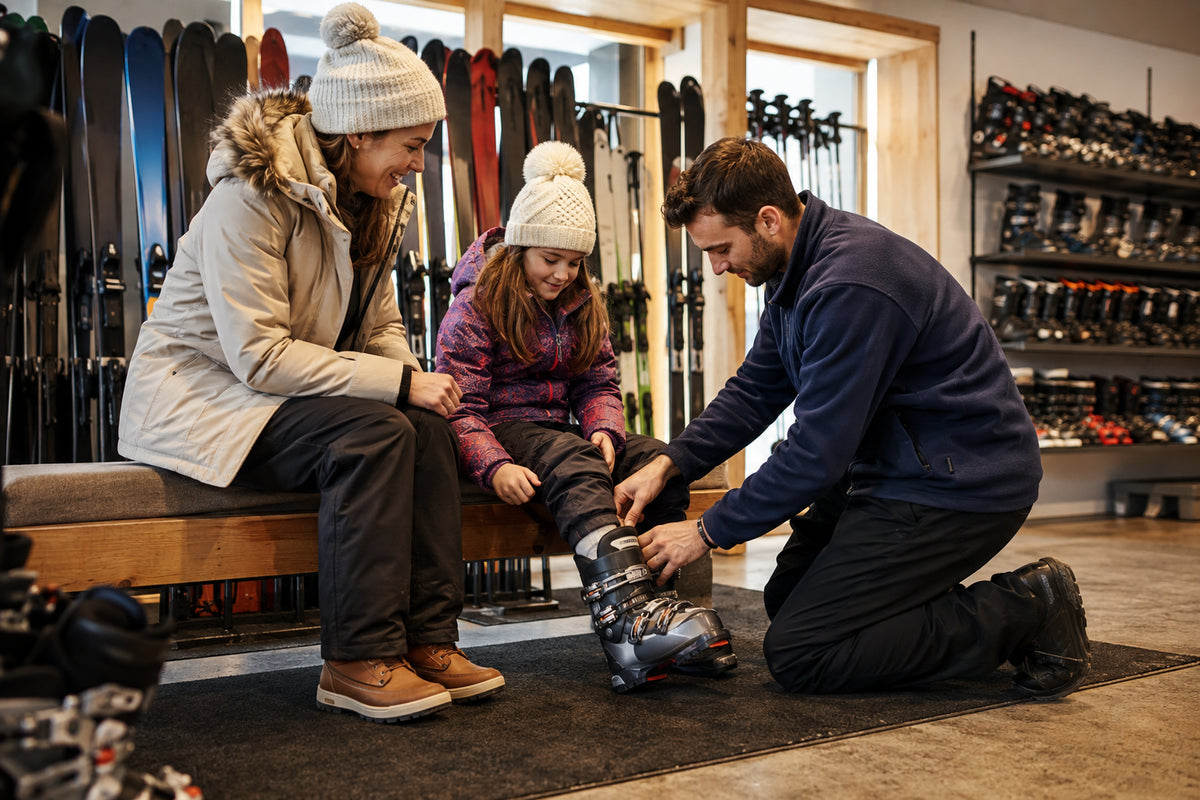
What a Good Ski Boot Fitter Should Do to Earn Your Trust
Your ski boots are arguably the most important piece of equipment you own. They're the connection between your body and your skis, and they affect everything from comfort to balance, control, and confidence.
Unfortunately, plenty of skiers have experienced the wrong kind of boot fitting: someone asks for their shoe size, hands them a pair of boots, checks whether their toes fit, and sends them to the register.
That's not professional boot fitting. That's trying on boots.
A good boot fitter should take the time to understand your feet, your skiing, and your expectations. And just as importantly, they should be willing to work with you after the purchase.
Here's what you should expect from a boot fitter who takes their job seriously.
1. The Fitting Should Start With a Conversation
Before a fitter brings out a single boot, they should ask you some questions.
- How often do you ski?
- What type of terrain do you spend most of your time on?
- What is your ability level, and what are you working toward?
- Have you experienced pain, numbness, cold toes, or heel lift in previous boots?
- Do you prefer a more precise, performance-oriented fit or a more forgiving recreational fit?
- Do you have any known foot issues or pressure points?
These questions matter because two skiers with identical foot measurements might need completely different boots.
Someone cruising groomers a handful of weekends each winter may have very different requirements from someone skiing aggressively every week.
A good fitter listens first and recommends second.
2. They Should Measure Both Feet, Not Just Ask Your Shoe Size
Street shoe size is a starting point, not a reliable ski boot size.
A professional fitter should evaluate both feet for length, width, volume, arch shape, and other characteristics that affect how your foot sits inside a ski boot.
It's also normal for one foot to be slightly longer or wider than the other.
The fitter should look for features such as:
- A wide or narrow forefoot
- A high instep
- Low, medium, or high arches
- Prominent ankle bones
- Heel and ankle shape
- How your foot changes when you're standing and bearing weight
At Sno-Haus, our boot fitters use a BootDoc podoscope to evaluate how your feet load under your body weight. Digital foot scanning is also available at our Greenvale location.
The purpose of these tools isn't to impress you with technology. It's to help the fitter make informed decisions instead of guessing.
3. A Good Fitter Should Check the Shell Without the Liner
This is one of the most important parts of the entire process.
During a shell fit, the fitter removes the liner from the ski boot and has you place your foot directly into the plastic shell.
This allows them to evaluate the actual space around your foot, including the length, width, and overall volume of the boot.
Why does this matter?
Because a thick, comfortable liner can disguise a shell that's fundamentally the wrong size.
Over time, ski boot liners compress and change shape. A boot that felt wonderfully roomy in the store may become sloppy after several days on snow if the shell was too large to begin with.
You can create more room in certain areas of a tight shell. Making an oversized shell properly smaller is much harder.
A fitter who checks the shell first is looking beyond how the boot feels during the first five minutes.
4. They Should Explain How a Proper Ski Boot Is Supposed to Feel
A new ski boot shouldn't feel like a comfortable sneaker.
A correctly fitted ski boot should feel snug and supportive, with your heel held securely and relatively little unwanted movement inside the boot.
When standing upright, your toes may lightly touch the front of the liner. As you flex forward into a skiing position, your heel should settle back and some of that toe pressure should ease.
That's normal.
What isn't normal is sharp pain, severe pressure on a specific bone, or numbness that develops because the boot is compressing your foot.
A trustworthy fitter should be able to explain the difference between a close performance fit and an actual fit problem.
They also shouldn't simply tell you that every painful boot needs to be "broken in."
5. Footbeds, Liners, and Adjustments Should Have a Purpose
Once the correct shell has been selected, the fitter can evaluate whether the boot needs additional customization.
Depending on your feet and the boot, this might include:
- Supportive footbeds: Helping support the foot and improve its position inside the boot.
- Heat molding: Shaping compatible liners around your foot.
- Shell punching: Creating more room around specific pressure points.
- Shell grinding: Carefully relieving pressure in targeted areas.
- Heel or ankle adjustments: Improving heel retention and reducing unwanted movement.
- Stance adjustments: Evaluating how the boot supports your natural skiing position.
Not every skier needs every modification.
A good fitter should explain why a change is being recommended, what improvement it is intended to produce, and whether it involves an additional charge.
The objective isn't to sell you every accessory on the shelf. It's to build a boot that works with your foot.
6. They Should Have You Stand, Flex, and Spend Time in the Boots
Boot fitting should involve more than sitting on a bench and saying, "They feel okay."
You should stand in the boots, flex forward, and simulate a skiing stance.
Your fitter should check whether your heel stays secure, whether the upper cuff feels appropriate, and whether the fit changes when you put weight into the boot.
You should also understand how to buckle your boots properly. Overtightening the lower buckles to compensate for a poor fit can create unnecessary pressure and discomfort.
If something feels wrong, say so. A good fitter wants that feedback.
7. The Relationship Shouldn't End at the Register
This is where a specialty ski shop can make the biggest difference.
Even a carefully fitted boot can reveal a pressure point after a full day on snow. The forces involved in skiing are different from standing on the shop floor.
A responsible fitter should encourage you to come back if something isn't right.
That follow-up might involve a small adjustment, additional liner work, a pressure-point modification, or reassessing how your foot sits in the boot.
And if the boot itself is the wrong shape for your foot, the fitter should be honest about the limitations instead of promising that every problem can be solved.
Trust is built when a shop takes responsibility for the fit, not just the sale.
The Sno-Haus Lifetime Boot Fit Guarantee
At Sno-Haus, we believe buying a ski boot should start a relationship, not end one.
That's why ski boots purchased at Sno-Haus come with our Lifetime Boot Fit Guarantee.
For as long as you own the boots, you can return for covered fit adjustments, including liner molding and appropriate shell modifications, at no additional fitting charge.
We also work on boots purchased elsewhere, although separate service charges apply.
Our goal is straightforward: if your boots need attention, you should have a real person and a real shop to come back to.
Frequently Asked Questions
How long should a professional ski boot fitting take?
A first fitting often takes around an hour, sometimes longer depending on your feet and the customization required. You should allow enough time for measurement, shell fitting, trying on boots, and discussing adjustments.
Should ski boots hurt when you first try them on?
Ski boots should feel snug and supportive, but sharp pain, severe pressure points, and numbness are warning signs. A professional fitter can help distinguish a close-fitting boot from a boot that needs adjustment.
What is a shell fit in ski boots?
A shell fit is a sizing check performed with the boot liner removed. It allows the fitter to examine the actual space around your foot and determine whether the plastic shell is the appropriate size and shape.
Can ski boots be adjusted after you've skied in them?
Yes. Many boots can be adjusted through liner molding, shell punching, grinding, or other fitting techniques. The options depend on the boot's construction and the specific fit problem.
Does Sno-Haus offer lifetime ski boot fitting?
Yes. Ski boots purchased at Sno-Haus include a Lifetime Boot Fit Guarantee covering fit adjustments for as long as you own the boots. Sno-Haus also offers fitting services for boots bought elsewhere.
Get Fitted by Someone Who Stands Behind Their Work
Sno-Haus has been helping Long Island skiers find the right equipment since 1959.
Visit our boot fitters in Huntington, Greenvale, or Hempstead. We'll take the time to understand your feet, explain your options, and help you get into boots designed for the way you ski.
Learn more about our professional boot fitting process, or explore our ski boot selection before coming in.
Because the right ski boot isn't just the one that feels good in the store. It's the one you can confidently ski in season after season.


