

Ski Helmet Safety: Why Proper Fit Matters and When to Consider a Visor Helmet
A ski helmet is one of the most important pieces of equipment you put on before heading to the mountain, but simply wearing a helmet is not enough. The helmet needs to fit properly, stay securely in place on your head, and provide the level of impact protection you want for skiing or snowboarding.
Modern ski helmets have come a long way in fit, comfort, ventilation, and impact management. Many helmets now incorporate technologies designed to help manage the various forces that can occur during a fall. Visor helmets have also become increasingly popular, combining a helmet and eye protection into one integrated system.
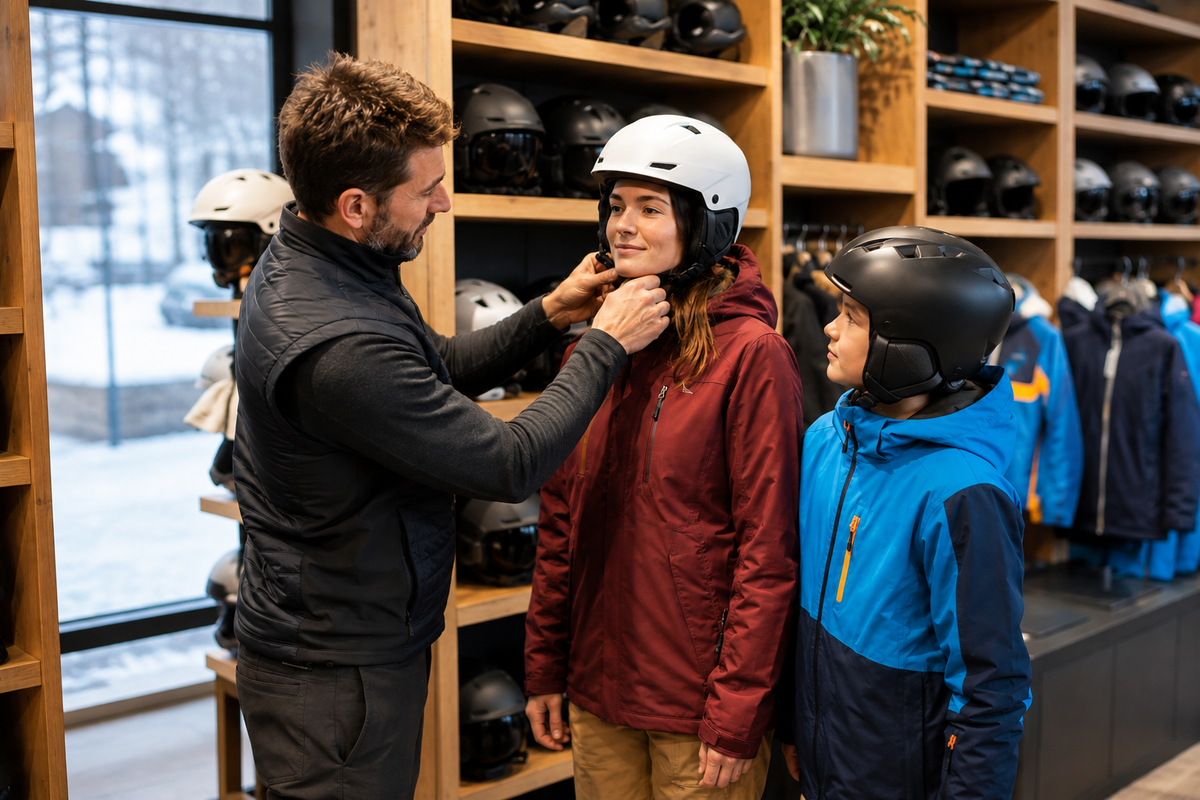
At Sno-Haus, we believe choosing a ski helmet should start with fit and protection—not color, graphics, or price. A helmet should feel right on your head before anything else matters. You can browse our current selection of ski and snowboard helmets before visiting one of our Long Island stores to try different models on in person.
Why Proper Ski Helmet Fit Is So Important
A ski helmet is designed to protect your head while it is sitting in the correct position. If the helmet is too large, too loose, or simply the wrong shape for your head, it may move during a fall rather than staying securely where it is intended to sit.
A properly fitted ski helmet should feel comfortably snug around your entire head. It should not easily slide forward over your eyes, move backward, or rock from side to side when you shake your head. You should feel even contact around your forehead, temples, and the back of your head, without painful pressure points.
The helmet's adjustment system can help fine-tune the fit, but it should not be used to make an oversized helmet work. If you have to tighten the adjustment dial excessively to stop the helmet from moving, you may need a smaller size or a helmet with a different internal shape.
Proper fit matters because a helmet can only perform as intended when it remains securely positioned on your head. Even a helmet with advanced protection technology needs to fit properly to provide the protection it was designed to provide.
Your Helmet Should Protect Your Forehead, Too
One of the most common helmet-fit problems is wearing the helmet too far back on the head. The front of the helmet should sit in a natural position above the eyebrows rather than leaving a large portion of the forehead exposed.
This is also important when pairing a helmet with ski goggles. Ideally, the goggles and helmet should meet cleanly without a large gap between them. If you need to push the helmet backward because your goggles do not fit properly underneath it, the better solution is to find a helmet-and-goggle combination that works together.
When shopping for a new helmet, bring your goggles with you. Trying the two pieces together allows you to check the overall fit before discovering a compatibility issue on your first day of skiing.
Why Modern Impact-Management Technology Matters
Ski and snowboard falls do not all happen in the same way. You might fall directly onto packed snow, catch an edge and hit at an angle, or make contact with another object while you are moving. Because impacts can occur from different directions, helmet manufacturers have developed additional technologies intended to help manage different types of impact forces.
Depending on the helmet, you may see technologies such as MIPS, Koroyd, Atomic AMID, or other impact-management systems. Some are designed to help manage rotational motion associated with certain angled impacts, while others use specialized materials or structures intended to absorb or manage impact energy.
No helmet and no impact-management system can prevent every concussion or head injury. A helmet should never create a false sense of security. However, when comparing new helmets, we strongly recommend looking beyond basic appearance and considering the protective technologies built into each helmet.
Brands carried by Sno-Haus, including Giro, Smith, and Atomic, offer helmets with different approaches to fit and impact management. The important thing is to compare the complete helmet—its fit, construction, protective features, and comfort—rather than choosing based on a single feature.
Fit and Protection Need to Work Together
Advanced helmet technology does not replace proper fit, and proper fit does not mean you should ignore the helmet's protective construction. The two work together.
A loose helmet with advanced impact technology is still a poor fit. At the same time, when purchasing a new helmet, it makes sense to compare modern protective features rather than choosing solely because a helmet is inexpensive or looks good.
At Sno-Haus, we encourage skiers to view helmet selection as a complete package: proper size, proper head shape, secure adjustment, comfortable positioning, and modern impact-management technology.
Don't Buy a Ski Helmet Based on the Size Label Alone
Measuring the circumference of your head is a useful starting point when choosing a helmet, but the number does not tell the whole story.
Everyone's head shape is a little different, and helmet shapes vary between manufacturers and even between models from the same brand. One medium helmet may fit well, while another may press against your forehead or leave too much room along the sides.
This is one of the biggest advantages of trying ski helmets on in person. Keep each helmet on for several minutes rather than deciding after a few seconds. Pay attention to pressure around your forehead and temples. Adjust the fit system and chin strap. Move your head from side to side and make sure the helmet remains securely positioned.
The goal is snug and comfortable—neither painfully tight nor loose.
Should You Wear a Hat Under a Ski Helmet?
Most skiers should not need a thick winter hat underneath a properly fitted ski helmet. Ski helmets are generally designed with their own liners and insulation for winter conditions.
A bulky hat can change the way the helmet sits on your head and may tempt you to buy a larger helmet than you actually need. If you want an additional layer for colder days, a thin balaclava or lightweight helmet-compatible layer is generally a better approach.
If you normally ski with a balaclava, bring it when trying on helmets so you can evaluate the fit with the equipment you actually plan to wear.
What Is a Visor Ski Helmet?
A visor ski helmet combines the helmet and eye protection into one integrated design. Instead of putting on a separate pair of ski goggles, you lower the helmet's visor into position over your eyes.
For many skiers, the biggest advantage is convenience. There are fewer separate pieces of equipment to manage, and the visor is designed to work as part of the helmet rather than being paired with it afterward.
Many skiers also enjoy the open field of vision created by a larger integrated lens. Visor helmets can be particularly interesting for people who wear prescription eyeglasses because certain models are designed with space for glasses underneath the visor.
A good example of this type of design is the Atomic Revent GT AMID Visor HD, which combines an integrated visor with Atomic's AMID impact-management technology and an adjustable fit system. Call for current size and color availability.
Who Should Consider a Visor Helmet?
A visor helmet may be a good option for skiers who want a simple all-in-one setup. It can be especially convenient for recreational skiers, travelers, families managing multiple pieces of equipment, and skiers who wear prescription glasses.
Another benefit is that the helmet and eye protection are designed as a system. With traditional goggles, you need to make sure the goggle frame fits properly with the helmet opening. A visor removes that particular compatibility question.
There are also visor options for younger skiers. For example, the Smith Survey Jr. MIPS Helmet combines an integrated visor with MIPS and Koroyd technologies and is designed to accommodate eyeglasses beneath the visor. Call for current availability.
Is a Visor Helmet Better Than Traditional Goggles?
Not necessarily. Both systems have advantages.
A visor helmet provides convenience and an integrated fit. Traditional goggles provide more flexibility. Skiers who already have goggles they love, frequently change lenses for different conditions, or want to replace their helmet and goggles independently may prefer the traditional setup.
The safety question should not simply be "visor or goggles?" The more important question is whether the helmet itself fits securely and comfortably and provides the level of protection you want.
A properly fitted conventional helmet with properly fitting goggles can be an excellent setup. A properly fitted visor helmet can also be an excellent setup. Do not sacrifice helmet fit simply because you prefer one style over another.
How Should a Visor Ski Helmet Fit?
The helmet portion of a visor helmet should fit just as securely as any other ski helmet. The integrated visor then adds another fit consideration: how the lens sits in front of your face.
When trying on a visor helmet, lower the visor completely. Make sure it reaches its intended position comfortably without pressing awkwardly against your nose or cheeks. Check your peripheral vision and look for excessive gaps around the face.
If you wear prescription glasses, always try the visor helmet with your actual glasses. Eyeglass frame shapes and sizes vary considerably, so a visor that works perfectly with one pair may not work as well with another.
Don't Forget Comfort and Ventilation
Safety and fit come first, but comfort matters because you may be wearing your helmet for an entire ski day.
Ventilation can make a noticeable difference as weather conditions change. A helmet that feels warm and comfortable on a cold January morning may feel very different during a sunny spring afternoon. Depending on the model, adjustable ventilation can help you control airflow throughout the day.
Also check the ear pads, liner, chin strap, and fit dial. Operate the controls while wearing gloves if possible. Equipment that is easy to adjust inside a warm store may feel very different when you are standing outside in winter conditions.
When Should You Replace a Ski Helmet?
A ski helmet that has been involved in a significant impact deserves careful attention. Helmet damage is not always obvious from the outside, and some protective materials are designed to manage impact energy rather than repeatedly absorb major impacts.
Follow the helmet manufacturer's recommendations regarding replacement after a significant impact. You should also regularly inspect your helmet for a cracked shell, damaged liner, worn straps, broken buckles, damaged adjustment systems, or other signs of deterioration.
If you are uncertain about the condition of an older helmet, bring it with you to Sno-Haus and compare it with today's helmet options before heading back to the mountain.
Get Your Ski Helmet Fitted Before Your Next Trip
For Long Island skiers heading to the Catskills, Adirondacks, Vermont, New Hampshire, or destinations farther north, getting your helmet sorted before you leave home gives you time to make sure everything works together.
Bring your goggles. Bring your prescription glasses if you wear them. Bring the thin balaclava you normally wear while skiing in. Most importantly, try more than one helmet rather than assuming the first model in your measured size is automatically the right fit.
Sno-Haus has been serving winter sports customers since 1959 and carries ski helmets from brands including Giro, Smith, Salomon, Oakley, and Atomic. Our staff can help you compare helmet sizing, head shape, fit systems, impact-management technology, and visor designs.
You can visit Sno-Haus in Huntington, Greenvale, or Hempstead to try on helmets in person. Call for current model, size, and color availability.
Frequently Asked Questions
How do I know if my ski helmet fits correctly?
A ski helmet should feel snug around your entire head without creating painful pressure points. It should remain securely positioned when you move your head and should not easily slide forward, backward, or from side to side. The adjustment system should fine-tune the fit rather than compensate for a helmet that is too large.
Why is proper ski helmet fit important for safety?
A helmet is designed to protect while it is positioned correctly on your head. A helmet that is too loose may shift during a fall. Correct sizing, head shape, and adjustment help keep the helmet securely positioned where it is intended to provide protection.
What are Mips, Koroyd and Atomic AMID?
Mips, Koroyd, and Atomic AMID are examples of technologies used in certain helmets to help manage different types of impact forces. Depending on the system, the design may focus on rotational motion, impact-energy management, or multidirectional impacts. No helmet technology can prevent every concussion or head injury.
Are visor ski helmets good for people who wear glasses?
Some visor helmets are designed to provide enough room for prescription glasses underneath the visor. Because eyeglass frames vary, it is important to try the helmet with your actual glasses to ensure the helmet and visor fit comfortably.
Is a visor ski helmet better than a helmet with goggles?
Neither system is automatically better for every skier. Visor helmets offer an integrated, convenient design, while traditional goggles give skiers more flexibility to change lenses or replace the helmet and goggles separately. Proper helmet fit should remain the priority with either setup.
Need help finding the right ski helmet? Visit Sno-Haus in Huntington, Greenvale, or Hempstead to compare helmet shapes, sizes, fit systems, impact-management technologies, and visor helmets in person. Bring your goggles and prescription glasses if you use them, and call for current availability.


